// FOUNDRY5
Regulated software development

Somebody outside your company decides whether this product ships: the FCA, an NHS trust applying DTAC and clinical safety, the safeguarding rules and stricter store reviews for software used by under-18s, or an enterprise buyer's security team. Most products that fail those reviews work as designed. What they lack is evidence the reviewer can read.

✓ Review mapped before code · Evidence produced during the build

4Review gates covered
50+Products shipped
100%On-time delivery
Products that passed

Each product, the review it had to clear, and the number on the other side.

Each card is one client, one gate and one number, from a product that went through its review rather than around it.

Before you go further

Five situations where we are the wrong studio for you.

Saying yes to any of these would cost you more than it costs us. Each one links to a better route, so you can rule us out before anyone books a meeting.

Where most of this starts

Three situations bring most people to this page.

All three are recoverable. In each one the review now sets the pace, and the build has to fit around it.

01 Late

The review turned up in month five

You were building a product. Then a partner, a board member or a customer asked which review it has to pass, and the answer was one nobody had planned for. The launch date stayed exactly where it was.

02 Failed

The last supplier failed the security questionnaire

Your product works. The questionnaire came back with gaps that no rewording can close, because the evidence the reviewer wants was never produced. The second attempt has to land, and everyone in the room knows it.

03 Unclear

Nobody can tell you what the review will ask for

You hold quotes from studios who will happily build what you describe. None of them can say what the reviewer will want to see, so none of them can say what the build will cost.

The Week-One Review

One week that decides the shape of the build.

Before any build is committed, the first week establishes what your reviewer will ask for and whether your current plan survives it. Most of the expensive surprises in a gated build are visible in that week, provided somebody goes looking.

What you walk away with

A plan sequenced backwards from the review.

Yours to keep whether or not you build with us. Hand it to another supplier and it still works.

  • A written map of the gate and the person who signs it off
  • The evidence pack you will need, with an owner against each item
  • The decisions that have to be made before code, not after it
  • A build plan sequenced backwards from the review date

5 days

The fee is quoted before you start and credited against the build when you go ahead.

What happens during the Week-One Review, day by day
#What happensWhen
01Name the gate: the review, the person who signs it off and the date that cannot moveDay 1
02List the evidence the review will ask you to produce, with an owner for each itemDay 2
03Test your current plan against that list and find what breaksDay 3
04Decide the sequence: what is settled before code, and what is cut to protect the dateDay 4
05Price it: a build plan, a risk list with named owners and a fixed quoteDay 5
One build in detail

One build, shaped by the review it had to pass.

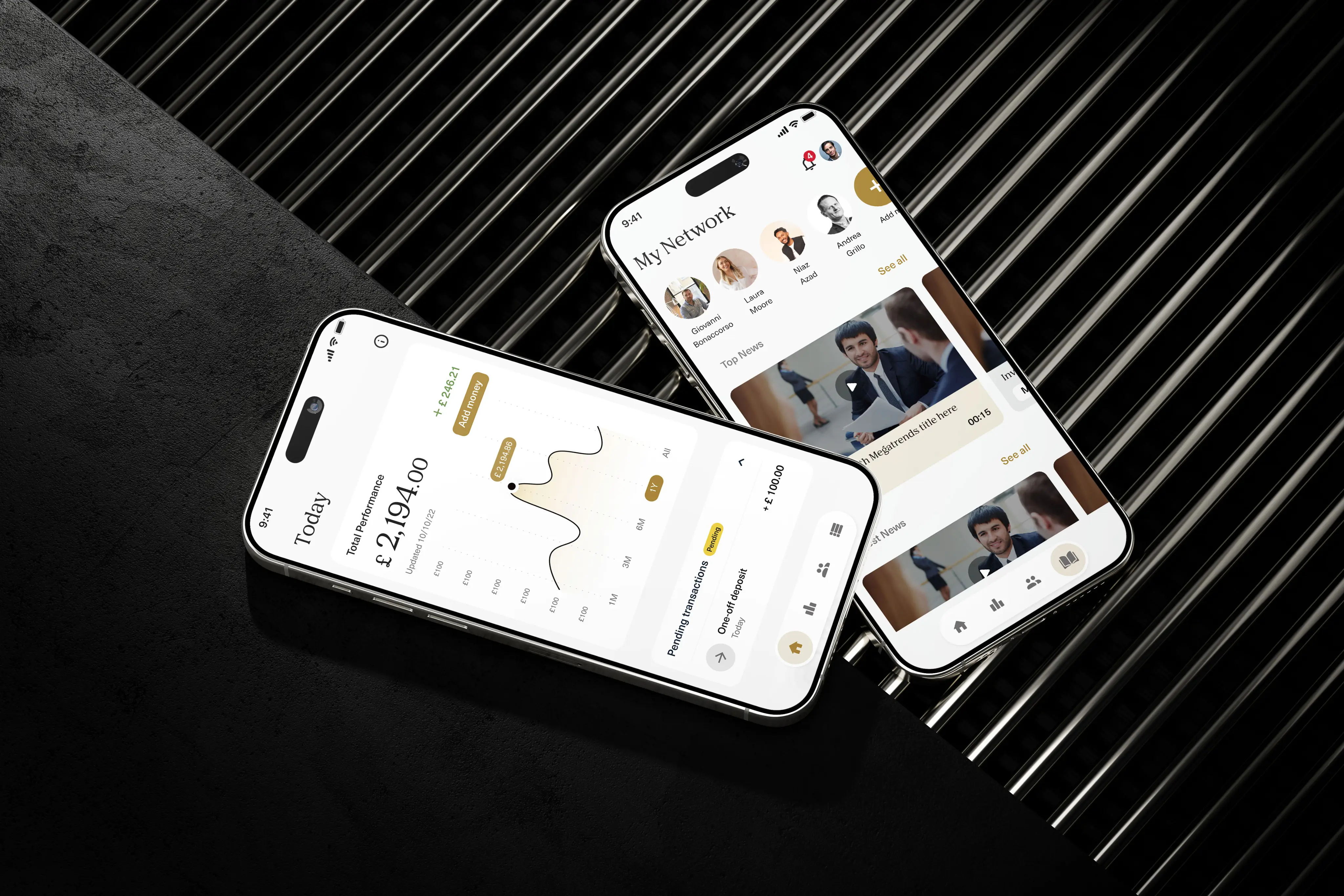
Gather is a multi-currency retail investment platform, which puts it in one of the least forgiving places to build software: the product holds customer money, and every screen that influences an investment decision has to be defensible after the fact.

The build ran backwards from the review. Suitability, permissions and the audit trail were settled before the interface, so the evidence came out of the build as it happened. A deliberately narrow first version kept the surface tight enough to defend screen by screen.

Evidence reconstructed after launch reads like a ship's log written at the end of the voyage, and reviewers can tell.

The result is a platform that opens at a £30 minimum entry, putting regulated investing within reach of people who would never clear a four-figure threshold.

Read the Gather case study
Gather investment app
How we price

Gated work costs more, and here is why.

A build with a review attached carries work an ordinary quote leaves out: evidence produced as you go, documentation a stranger can follow, and time held back for findings.

Five things move the number: how many gates apply, how sensitive the data is, whether a review has already failed, how many systems the product talks to, and how much time is left.

Band 0

The Week-One Review

5 days, fixed fee

One week at a fixed price, before any build is committed, to find out whether your plan survives the review.

  • Gate and evidence map
  • Risk list with named owners
  • Sequenced build plan and price
  • Credited against the build
How the week works
Band 1

Gated MVP

Quoted after the Week-One Review

The narrowest version of the product that can pass its review and still go in front of real users.

  • Designed backwards from the review
  • Evidence produced during the build
  • Scope cut to what the gate requires
  • Handover documentation included
Band 2

Gated production build

Quoted after the Week-One Review

A full production product carrying the audit trails, controls and documentation a reviewer expects to see.

  • Multiple gates where they apply
  • Audit trails and access control
  • Security questionnaire support
  • Post-review remediation included
Band 3

Embedded team

Quoted after the Week-One Review

A standing team for products facing repeat reviews, renewals and new markets.

  • Monthly engagement
  • The same team across reviews
  • Evidence maintained, not rebuilt
  • Roadmap sequenced around review dates
Minimum project size

Some projects are too small for us to staff a gated build properly. We will say so on the first call rather than stretch the work thin, and point you to a specialist who fits the size of the project.

Quoted separately by the people who provide them: penetration testing, legal counsel, and regulator or certification fees. You will know which ones your gate needs before you commit to anything.

Ask for a quote
Who runs this work

The founders you speak to are the people who build it.

A founder leads every gated build from the first call, because the decisions that make a review survivable are made in week one.

The studio is twelve people in London, and it takes on two to three new projects a month. That cap is deliberate. What gets said in the review conversation is what gets written into the code, because the same people are in both rooms.

Philip Wasko, co-founder

Philip leads business development and partnerships, and he is the person you speak to first about a gated build.

In Philip's words
Founders ask me first what the build will cost. The better first question is who outside your company can stop it shipping, and on what date. Answer that, and the price follows from it.

Philip Wasko

Co-founder, Foundry 5

The four gates

Four gates, four different ways to fail.

Each review asks for different evidence and catches teams out in a different place. Find yours, then read the page written for it.

Gate 01

FCA authorisation and oversight

Evidence that permissions, suitability, client money handling and audit trails behave the way your application says they do.

Where teams lose it

The product gets built first and the audit trail arrives near the end, so nobody can show why a given customer saw a given screen.

How we handle the FCA gate
Gate 02

NHS DTAC and clinical safety

A completed DTAC assessment, a clinical safety case, and a hazard log signed by your clinical safety officer.

Where teams lose it

Clinical risk gets written up at the end as paperwork, so the hazard log and the product describe two different things.

How we handle NHS DTAC and clinical safety
Gate 03

Software used by under-18s

Age assurance, consent and parental consent, safeguarding routes, the handling of children's data, and a stricter App Store review.

Where teams lose it

Age is collected as a profile field instead of an assurance step, and the store review catches it after the launch date is committed.

How we handle the App Store and safeguarding review
Gate 04

Enterprise security review

A procurement pack and a completed security questionnaire covering access control, data residency, incident response and subprocessors.

Where teams lose it

The questionnaire lands after commercial terms are agreed, and the answers do not exist because nobody produced them during the build.

How we handle the enterprise security review
Procurement questions

What buyers ask before they sign.

Compliance and procurement leads ask these before signing. Gate-specific questions live on each gate’s own page.

You do. The repository, the documentation and every artefact produced for the review are yours, handed over in a form another team can pick up. Nothing is held back to keep you on a retainer.

The findings get worked until it passes, as part of the engagement rather than a change request. The one exception is a new gate nobody knew about when the scope was agreed.

Changes the reviewer forces on the product are handled inside the engagement, because anticipating them is what you hired us for. Changes you ask for are quoted before anyone starts them, never after.

Yes, and the build moves faster for it. They interpret what your reviewer expects, and we turn that interpretation into architecture, evidence and sequencing. Legal and regulatory advice stays with them.

The review you have to pass, the date it has to pass by, and one named person inside your company who can make decisions and sign them off. Without that person, the work stalls whatever money is behind it.

Yes. Go ahead and the fee is credited against the build. Stop after the week and you keep the gate map, the evidence list and the plan, ready for any supplier.

You can see how one is built. Client packs belong to the client, so the walk-through covers what each item contains and how it gets assembled, with nobody else's data in it.

Yours. Under DCB0129 the organisation that makes a health IT product appoints a clinical safety officer, a registered clinician who signs off the safety case and hazard log. We build so they have evidence to sign, and we never advise on clinical risk.

London based / Review led

Tell us which review you have to pass, and when.

Those two answers set the sequence, the evidence, the team and the price, and they are the two nobody can guess for you. Send them, and the reply names your band or tells you we are the wrong studio for it.

FOUR GATES / ONE STUDIO / WE WILL TELL YOU IF YOURS IS NOT ONE OF THEM